MacGregor’s
Folding hatch covers
It is important for all cargo ships that weather deck and cargo space layouts are designed with the highest possible level of cargo handling efficiency in mind. This allows for fast and safe loading. MacGregor makes sure that the arrangement of hatch covers, sealings, support pads and locators on board your ship are optimised to deliver uncompromis...
Price on request
Final pricing, availability and delivery are confirmed in your quotation.
Review My Cart →Product overview
It is important for all cargo ships that weather deck and cargo space layouts are designed with the highest possible level of cargo handling efficiency in mind. This allows for fast and safe loading. MacGregor makes sure that the arrangement of hatch covers, sealings, support pads and locators on board your ship are optimised to deliver uncompromised weathertightness to protect the cargo and to ensure safety.
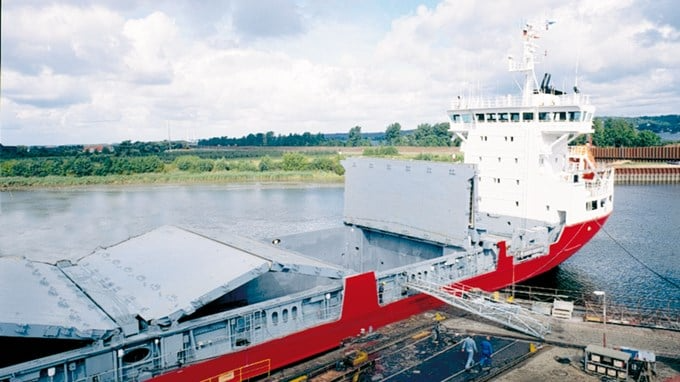
The efficient use of cargo space is of utmost importance for general cargo vessels. Folding hatch covers are designed to carry various deck cargoes and to form functional cargo areas to facilitate flexible cargo operations. In an open position they provide access to the hold for loading and discharging cargo and in the closed position they seal the hatchway in a weathertight manner. Tweendeck folding hatch covers are also available.
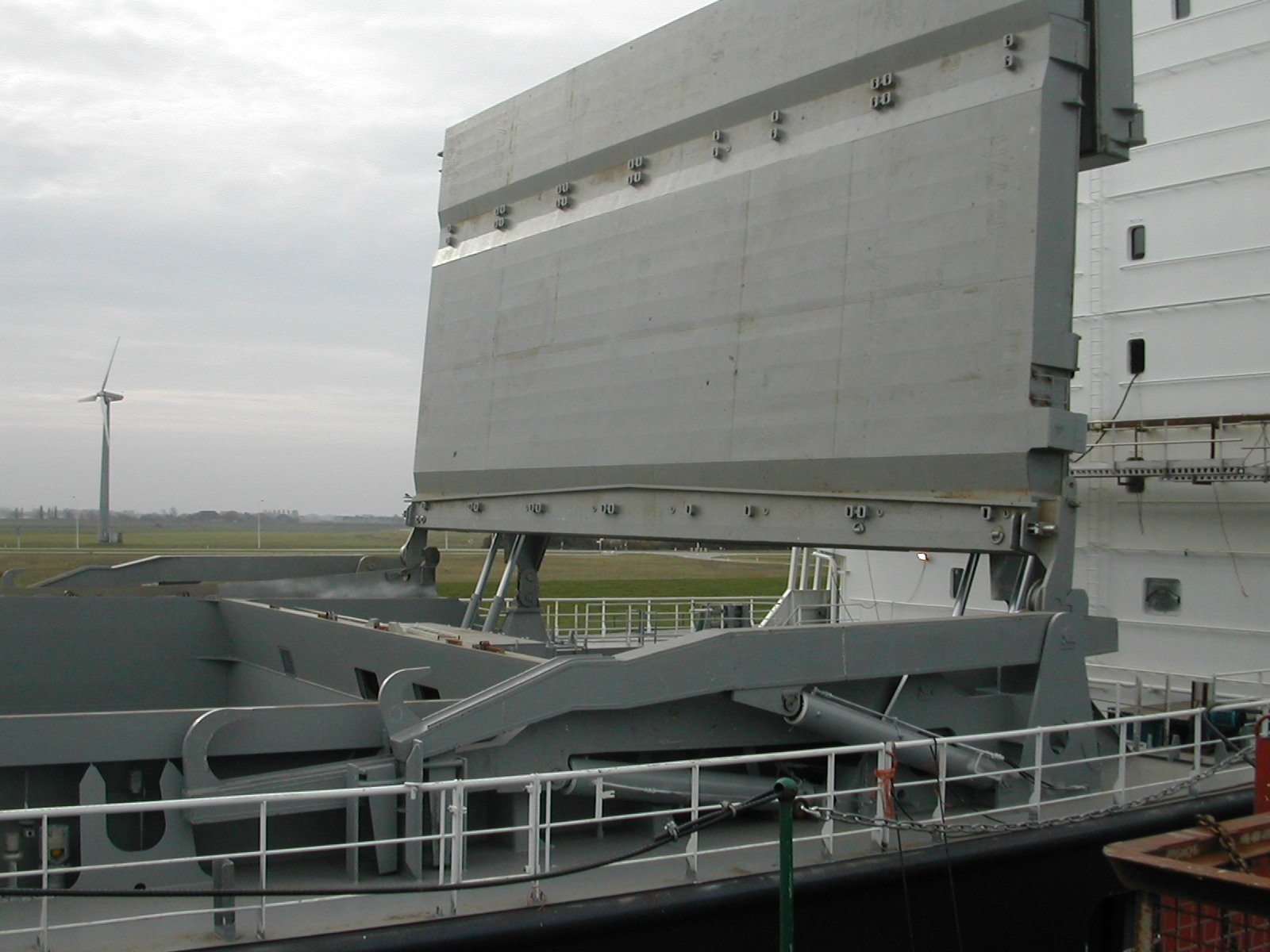
MacGregor hydraulic folding covers consist of two (or more) panels, which are connected by hinges to form a folding pair. In many cases, the hatch cover comprises two folding pairs. One pair is stowed at the aft end of the hatch and the other forward.
The folding pair is operated by hydraulic cylinders acting directly on the end hinge arms, which are connected at stools on the deck. When the cylinders push the end panel up from the closed position, the cover folds and the second panel, fitted with wheels, rolls on rails to a stowage position. The panels are usually secured in the open position by semi-automatic locking devices interacting with the wheel arms.